


Shut up and Obey: Responding to the Dubia of Two Cardinals
Following the reply of the Superior General of the Society of St. Pius X to the Vatican regarding the planned episcopal consecrations on July 1, 2026, two Cardinals whom some commentators consider “conservative” or “traditional” issued fairly strong criticisms of the Society’s plan to proceed with the consecrations. Cardinal Robert Sarah (former head of the former Congregation for Divine Worship) published a critique of the Society and Cardinal Gerhard Müller (former head of the former Congregation for the Doctrine of the Faith) spoke about the issues in a German-language interview.
In responding to the points raised by the two Cardinals we must first remember that neither of them are Traditionalists in the proper sense of the term. They are part of what is often called the Conciliar Church. Although they have demonstrated over the years some tolerance or even some support of the Traditional Latin Mass, they both accept and use the Novus Ordo. Secondly, although both have been known to be critical of some of the most outrageous incidents of the Francis pontificate, both essentially maintain that Vatican II is above any criticism. They endorse and promote many of the novelties of Vatican II such as ecumenism, religious liberty, and collegiality. They may reject what they consider to be erroneous “interpretations” of Vatican II, but neither question any texts or passages of the super-Council’s documents. In a letter of Cardinal Müller to Bishop Fellay from 2017 and published on the Society’s website, the Cardinal makes clear that the Society (and by implication all Catholics) must “explicitly declare their acceptance of the teachings of the Second Vatican Council and of the post-conciliar period, granting to said doctrinal affirmations the degree of assent due to them.” In other words, according to Cardinal Müller , every jot and tittle not only of the documents of Vatican II but all the “teachings” (whatever those are) of the post-Councilar era must simply be accepted. We must thus understand that no matter what label some commentators or podcasters put on Cardinals Müller and Sarah (traditional, traditional leaning, etc,), they are not traditional nor even comparable to a bishop such as Bishop Athanasius Schneider who has called for the correction of some of the statements in the documents of Vatican II and many post-Conciliar documents (especially of Francis).
Secondly, neither Cardinal articulates any arguments supporting his assertion that the Society will be breaking communion or committing an act of schism. They simply assert their conclusions as true without any evidence. Neither responds even obliquely to the Society’s theological explanation attached to the February 18 response to the Vatican that details why the act of consecrating these bishops will not claim to confer any jurisdiction independently of the Supreme Pontiff. Neither clearly defines terms and both blur the important distinction between disobedience (which can be either justified or unjustified) and schism.
Now that we have established the preliminaries, let us look first at some of the claims of Cardinal Sarah.
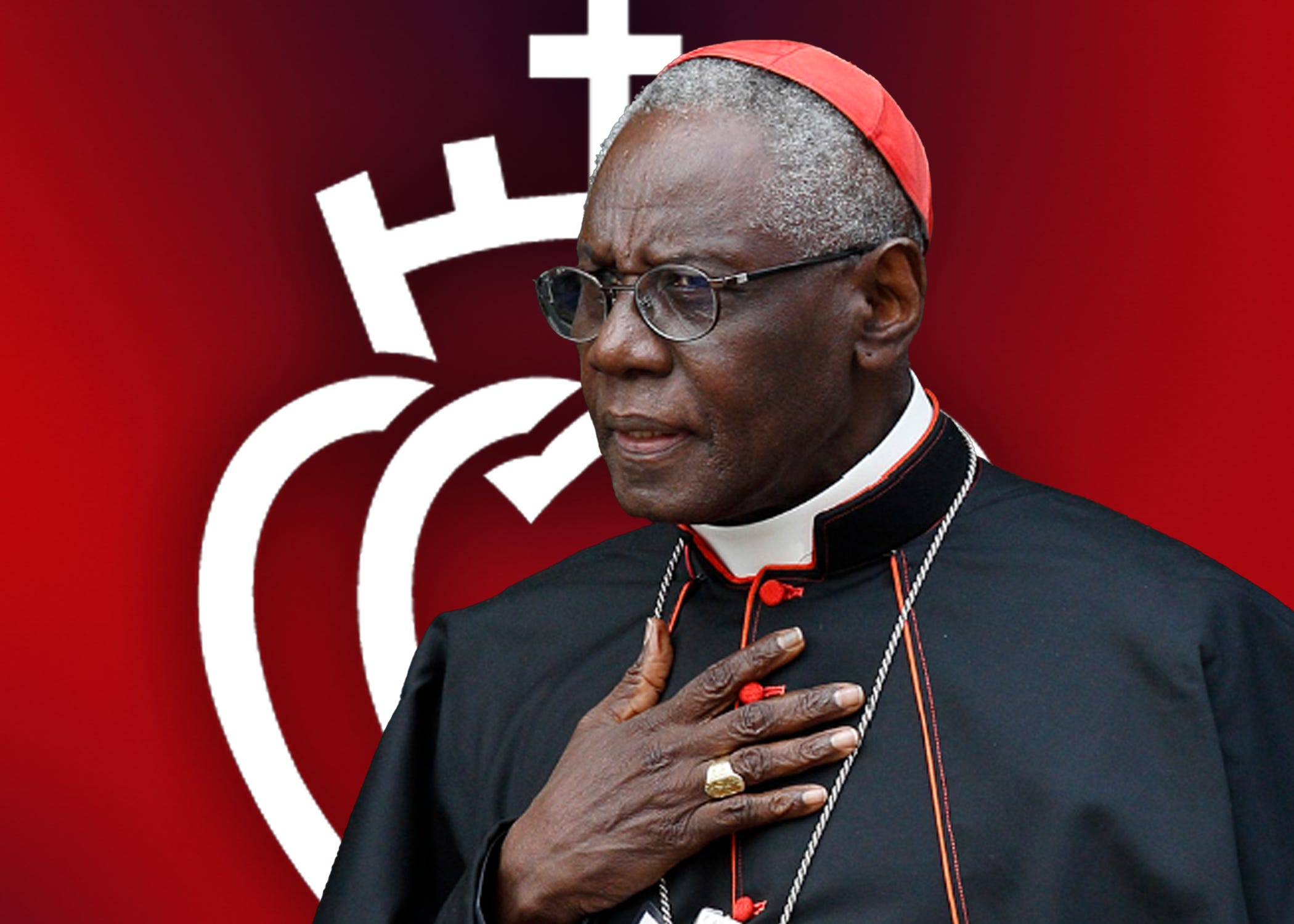
Cardinal Sarah responds to the Society’s invocation of the supreme law of the Church (the salvation of souls) thus:
We are told that this decision to disobey Church law is motivated by the supreme law of the salvation of souls: suprema lex, salus animarum.
But salvation is Christ, and He is only given in the Church. How can we claim to lead souls to salvation by means other than those He Himself has indicated to us? Is it to desire the salvation of souls to tear apart the mystical body of Christ in a way that may be irreversible? How many souls are in danger of being lost because of this new division?
There are two problems with this passage. First, the Cardinal does not consider that culpability for a tearing apart of the Mystical Body does not rest with the Society, but with the Council and its fruits. If the Society is correct and it is the Council and the post-Conciliar statements and decisions that are a rupture from what the Church has always believed and done, then it is those who are responsible for this rupture who have torn the Church apart and are leading souls to danger. If the Society is correct that they simply believe and act as all Catholics who were united to the Mystical Body before the Council, then how is it that they can be accused of tearing apart the Mystical Body by simply staying the same? If two people are standing in the same room and one leaves, the one who leaves cannot justly accuse the one who stays of abandoning him.
Secondly, the “means [of unity] He Himself has indicated” are three: hold the same faith, receive the same sacraments, and recognize the legitimate governors of the Church. That list does not include the absolute necessity of a papal mandate for an episcopal consecration. To claim it does require such demonstrates ignorance of history. For hundreds of years, the very concept of a “papal mandate” did not even exist in the Church and thus it cannot be of divine origin. Cardinal Sarah in no way explains how proceeding with a consecration in the case of a perceived necessity or grave inconvenience is rejecting the only way of salvation in and through the Church.
Ironically, Cardinal Sarah goes out of his way to admit the very crisis in the Church that the Society cites as justification for the decision to consecrate.
I know how much the deposit of faith is sometimes despised today by those very people whose mission it is to defend it. I am well aware that some forget that only the chain in the unbroken continuity of the life of the Church, the proclamation of the faith, and the celebration of the sacraments, which we call Tradition, gives us the guarantee that what we believe is the original message of Christ transmitted by the apostles. . . . [W]e see the cowardice of Christians and even prelates who renounce teaching the deposit of faith and prefer their personal opinions on matters of doctrine and morality.
Yet, after succinctly describing the crisis in the Church (a crisis that he admits includes the governing authorities in the Church), he simply concludes with the non-sequitur “But faith can never lead us to renounce obedience to the Church.” That would mean that obedience is more important than faith, which is a falsehood. Obedience can be required but not in all cases. As St. Thomas explains, God must be obeyed in all things, but human superiors may sometimes be disobeyed. He even explains that those under a vow of obedience although being subject to a more rigorous requirement of obedience may disobey in certain cases. He calls the belief that all superiors must be obeyed in all things “indiscreet obedience.”[1] Would Cardinal Sarah continue to stand behind this conclusion if a pope ordered in obedience that we believe there are four persons in God? If faith (in the Trinity) can never lead us to abandon obedience, then according to this conclusion we would have to obey this evil command. I would expect Cardinal Sarah would not accept the logical conclusion of his own grandiose principle, yet this is exactly what the Society is saying, the Conciliar commands, policies, and teachings, if obeyed, would cause us to contradict the faith and therefore obedience must give way to the faith.
Cardinal Sarah would likely avoid the logical consequences of his principle by turning to the flawed notion of tradition that has spread at and following Vatican II. This principle was insisted upon by Cardinal Müller in his discussions with the Society when he was head doctrinal prelate. He argued that the current authorities (and the current pope) have the power to define what is and what is not Tradition. Thus, if the current pope says Vatican II does not contradict prior papal teaching, then it does not, full stop, no questions can be asked. It is simply doctrinal positivism. If the current pope says “I know these novelties seem to be a break with what every Catholic believed before, but I simply declare they are not,” then you must ignore what reason tells you and simply obey this apparently unfounded conclusion. Thus, Cardinal Sarah says, “We are told that this [the SSPX position] is out of fidelity to the previous Magisterium, but who can guarantee this to us except Peter’s successor himself? This is a matter of faith.” So obedience is higher than faith but in fact it is a matter of faith that whatever (no matter how contradictory) the pope declares is tradition is ipso facto the faith and must be obeyed.
Cardinal Sarah makes two final pleas to the Society:
How can we continue to tear apart his body under the pretext of saving souls? Is it not he Jesus who saves? Is it we and our structures that save souls? Is it not through our unity that the world will believe and be saved? This unity is first and foremost that of the Catholic faith, it is also that of charity, and finally that of obedience.
. . .
I would like to remind you that Saint Padre Pio of Pietrelcina was unjustly condemned by men of the church during his lifetime. Although God had given him a special grace to help the souls of sinners, he was forbidden to hear confessions for 12 years!
As to the first, the Cardinal does get the order correct of the three components of unity: faith, charity, obedience. That order is important. The Society’s argument is that this order is hierarchical. Thus, if obedience would cause us to break the unity of Faith (by accepting something