Editor’s Note: This article was originally published as Part 3 in a three-part series at Tradition and Sanity Substack on February 13, 2025. It is republished here for the benefit of readers as we celebrate the feast of St. Pius X on September 3. -PAK
In Part 1, I looked at the origins of Modernism and formulated a definition, with the help of Cardinal Mercier. In Part 2, I traced its fundamental problem back to a false philosophy that undermines supernatural faith in a definite divine revelation and discussed how the Oath Against Modernism was dismantled by a pope, Paul VI, who seemed suspiciously eager to embrace at least some of the ideas condemned by it. In this concluding part, I will look at some examples of how the evolutionism characteristic of the Modernist view plays out in the current pope and in his predecessor. Lastly, I will connect the dots between what I shall call Black, Scarlet, and Lavender Modernisms.
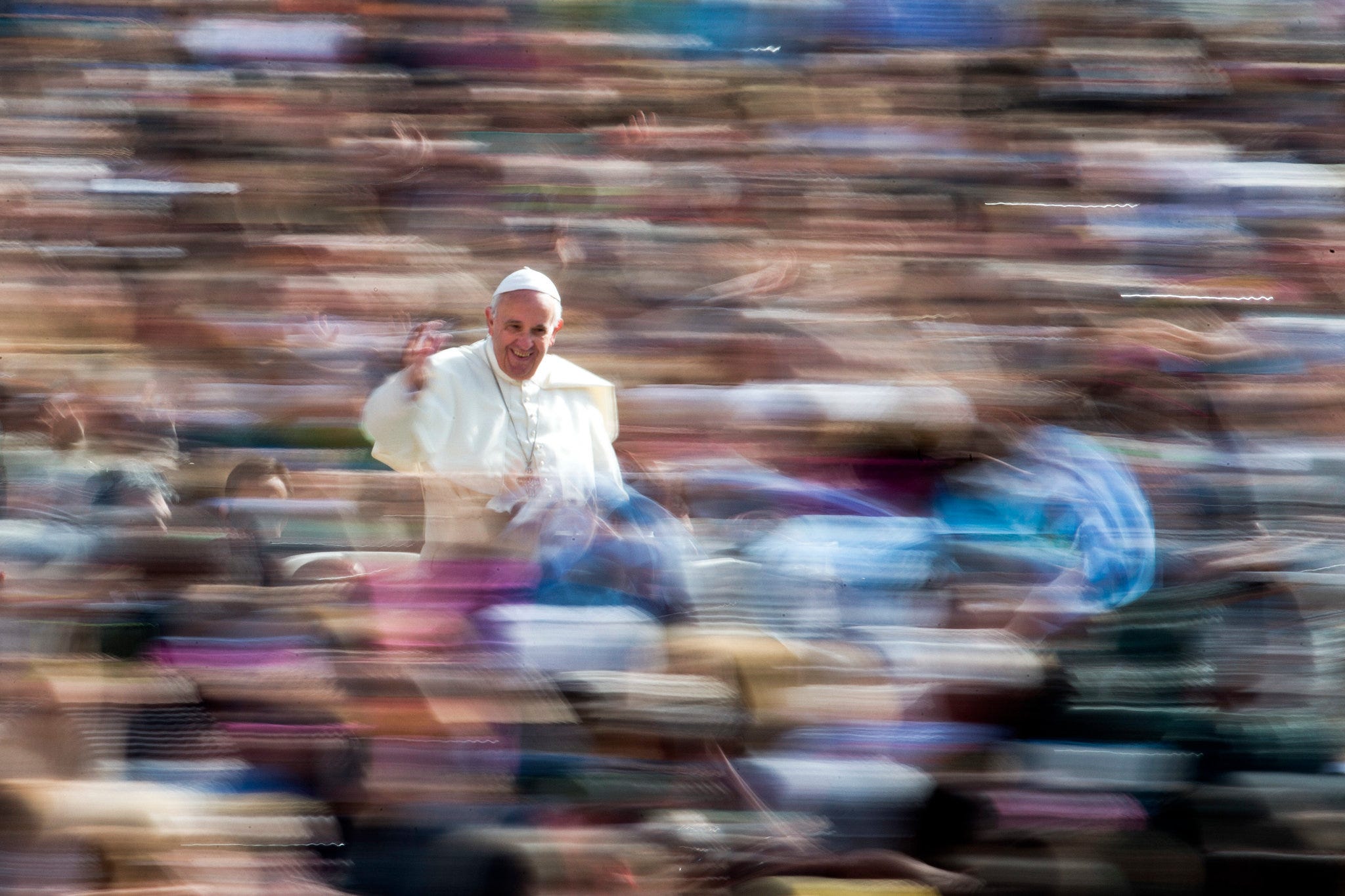
Francis as doctrinal evolutionist
One of the characteristic features of Modernism is its reliance on an evolutionary model of thought, in which truth is not static but dynamic: the Church does not possess the Truth at any given moment, but is ever searching for it, and ever stumbling upon new aspects of Truth that can even amount to a reversal of what the Church used to hold as true.1
We can see this approach vividly in Pope Francis, who maintains that the Church was actually wrong for 2,000 years in her support of the use of the death penalty, since we “now know” that the death penalty is contrary to human dignity, and therefore always and everywhere inadmissible (but this can be true only if it is per se malum, something evil in and of itself; for if it were not, it would sometimes be admissible). Or rather, it is perhaps more accurate to say that for a Modernist, the Church at a more primitive period of the development of human consciousness was right to promote the death penalty — it was bound to look legitimate to culturally immature people — but now in our stage of higher consciousness, which involves the apprehension of universal human rights, the brotherhood of all men, the non-divine source of political authority, and the universal benevolence of the Creator-God, we can see that the death penalty is wrong. Or so it may be for our particular phase of consciousness; evolution could lead us once more in a surprising direction, you never know.

Another example is the false teaching of the eighth chapter of Amoris Laetitia, which overturns the hitherto unbroken exclusion from reception of the sacraments of Catholics who are living in an objective state of adultery. The Modernist, however, would say that notions of mortal sin, objective sinfulness, worthiness, preconditions for sacramental reception, have all “evolved” under the influence of an ever-more comprehensive grasp of God’s merciful love, which “stops at nothing” (as they would say) and “is never earned or lost by our actions,” etc. Note that there is always a grain of truth in the midst of these errors, for otherwise they would have not the slightest plausibility for any intellect, however dim.
The universalism espoused by Francis in Abu Dhabi, in Singapore, and in many other places is yet another example: the Church once taught that it alone possesses and teaches the true religion given to us by God for our salvation, but “now we know” that God speaks to man through all religions and goes beyond them all, so each is a path to salvation for those who follow it sincerely. At best, Jesus is the “privileged path” of salvation, as Bishop Robert Barron said.2 One can detect here the influence of the subjective, emotional, and pragmatic theory of religion Pius X diagnosed in Pascendi.
One could multiply such examples of modern teachings, present already before the Council but emerging into the open afterwards, that bear this evolutionary stamp. Br. André-Marie writes:
Where Kant made all things static, Hegel introduced a dynamic element into his metaphysics (like Heraclitus). For Hegel, all things evolve in the dialectic of thesis, antithesis, and synthesis. History, truth, thought, indeed all reality is explained by this principle. In the history of thought, the Hegelian dialectic gives rise to “Historical Consciousness,” an acute awareness of change as a constant, describing all reality as in continual development. It further produces “Historicism,” the theory in which general laws of historical development are the determinant of events. In this theory, all things are subject to progressive evolutionary processes.3
Hegelian dialectic in Ratzinger
Indeed, we can see how even Benedict XVI’s theory of the “hermeneutic of continuity” imports or retains an element of Hegelianism. In the famous address he gave to the Roman Curia on December 22, 2005, he spoke not of a “hermeneutic of continuity” (although he used that expression at other times),4 but of a “hermeneutic of reform, of renewal in the continuity of the one subject-Church which the Lord has given to us.”